Children's Nativity Scene Sheep and Mary Fight Over Baby Jesus
With dictionary look upwards. Double click on any word for its definition.
This department is in advanced English and is simply intended to exist a guide, not to be taken too seriously!
Dates | ||||
|---|---|---|---|---|
| Advent | Christmas Eve | Christmas Day | The Queen's Speech | Boxing Day |
| The 12 Days of Christmas | New year's day'due south Eve | |||
| Christmas Food and Beverage | ||||
| Christmas Dinner | Christmas Pudding | Christmas Cake | Mince Pies | Mulled Wine |
| Images of Christmas | ||||
| Christmas Carols | Christmas Cards | The Christmas Stocking and Santa Claus | Christmas Presents | Christmas Crackers |
| Christmas Trees | Mistletoe | Holly and Ivy | Other Christmas Decorations | Pantomime |
| The Nascency Play | The Nascency Scene | |||
| Christmas On-line | ||||
Advent - (Four Sundays Before Christmas)

Advent is non widely historic in England, its celebration really originated in Frg, although in the church building calendar Advent is the official start of the stitch to Christmas.
Two traditions that have caught on in England are the Advent calendar and the Appearance candle. The Advent Agenda originated in the 19th Century from the protestant area of Deutschland. Protestant Christian families made a chalk line for every day in December until Christmas Eve. Before long, commercial entrepreneurs started replacing the ephemeral chalk lines with printed calendars. The first known Advent Calendar is for the advent of 1851. Present information technology is usually a thin rectangular bill of fare with 24 or 25 doors. The doors are numbered i-24/25. Door number 1 is opened on the 1st of Dec, door 2 on the 2nd etc. Behind each door in that location is a Christmas scene (merely the most pop ones have a chocolate backside each door) .
An Advent candle frequently has 25 marks on it, a bit of the candle is burned down past one mark each day. In some homes, 24 candles are kept, one for each night from Dec ane through Christmas eve. One candle is lit for a while on December 1, then a new candle is added each day for the 24 twenty-four hours period. Nevertheless, it is at present more than common to have four candles for the four weeks before Christmas. One candle is lit on the starting time Sun, ii the 2d week and so on. The candles were oft placed on a wreath upon the dining room table. Appearance candles are lit in many homes, schools and churches, in England, with a concluding central candle lit on Christmas Day; these are oftentimes on a hanging ornamentation known as an "Advent Crown." They became exceedingly popular due to a children'southward TV programme called Blue Peter, who every year fabricated an advent crown from old coathangers, tinsel and candles! Well, they used to use candles, but because of health and safety insanity they at present give instructions using baubles - it'due south not actually the same, only you can make an advent crown following the instructions in this pdf file.
Christmas Eve - December 24th

In England less emphasis is placed on Christmas Eve than in other countries, much more is fabricated of Christmas Twenty-four hours and Boxing Day. Carol singing, midnight church building services and going out to the pub are some of the activities that many families savor (sometimes all three activities can be combined into one fun nighttime out!).
Night time on Christmas Eve though is a very exciting time for young children. It is the time when Santa or Father Christmas comes. They hang up their stockings and get to sleep. Santa and his elves brand all the toys for Christmas in his habitation in Greenland. On Christmas Eve he piles all of the toys onto his sleigh and rides across the sky with his ix reindeer (Dasher, Dancer, Prancer, Vixen, Comet, Cupid, Donner (or it may be Donder), Blitzen and of course ... Rudolf!). The well-nigh famous 1 is Rudolf the who is always the ane at the forepart, to lead the style with his cherry nose. In the morn when the children wake up they open their stocking presents. Traditionally on Christmas Eve mince pies and sherry (or milk) are left out for Santa and present carrots are left for his reindeer. Most children are in bed mode before midnight waiting for Santa to visit.
There are some interesting facts almost Santa.
Christmas Solar day

The origins of the at present traditional Christmas Commemoration, distinct from before infidel winter holidays, engagement to sixth century England. By the middle ages, it was a well established important holiday, with traditional pageantry, community, music and feasting all its own. Customs from pre Christian days were incorporated into the Celebrations, and many still remain.
Still in 1647, the English parliament passed a law that made Christmas illegal, all festivities were banned past the Puritan leader Oliver Cromwell, who considered feasting and carousal on what was supposed to be a holy 24-hour interval to be immoral. The ban was lifted only when Cromwell lost power in 1660.
In Britain, the Holy Days and Fasting Days Act of 1551 (which has non yet been repealed) states that every citizen must nourish a Christian church building service on Christmas Day, and must not use whatsoever kind of vehicle to get to the service There are a large number of Britons who break this police every year. The law may have been intended to encourage humility by forcing even the wealthy to attend the church building on pes, or perhaps information technology was simply to avoid the traffic and parking vanquish that universal attendance would otherwise take brought nearly.
Afterwards, during Queen Victoria'south reign, Christmas became a fourth dimension for souvenir giving, and a special season for children.
Nowadays, co-ordinate to research by, of all things, Jarlsberg cheese, the average family gets out of bed just before 8am and is ready to start opening presents past 8.19am. Once the wrapping paper has been torn off all the presents, the family sits downwardly to breakfast at nine.02am, just not before they have tucked into a bit of chocolate at viii.39am.
13 per cent of families always attend church on Christmas Day.
Unfortunately all the excitement and stress means that at precisely nine.58 on Christmas morning the beginning rows begin, and the average parent ends upwardly losing it, and they outset to tell off their children for the first time around 11.07am.
The strain of cooking the large Christmas dinner sees the average Brit start to sip their offset alcoholic drink at xi.48am.
27 per cent of families sit to spotter the Queen'due south Speech communication.
Dinner is finally served at iii.24pm, with 85 per cent of people enjoying the traditional turkey with all the trimmings.
All that nutrient and potable means the first person falls asleep at around 4.58pm, with dad being the leader in losing the "staying awake" battle. Well-nigh one-half of those who do nod off end up annoying the others with their loud snoring. For those who manage to stay awake, family lath games are brought out at 5.46pm.
38 per cent of families think that spending fourth dimension with the family is the best affair well-nigh Christmas Day.
And lights out? xi.39pm.
The Queen's Message

One Christmas ritual non drawn from an ancient tradition is the British monarch's broadcast on Christmas twenty-four hour period. The tradition began in 1932 when King George Five read a special speech communication written by Rudyard Kipling. The broadcast was an enormous success . It began, "I speak now from my home and from my centre, to you all...".
Queen Elizabeth II continues the tradition to this twenty-four hour period. Every year she broadcasts her message on Christmas Day, and information technology is heard by millions of people all over the world. In England near people watch or mind to it whilst digesting their Christmas Dinner!
Battle Day - December 26th
In England Boxing Day celebrated on Dec 26th, is traditionally a time to give gifts to tradesmen, servants, and friends.
It originated in medieval times, when every priest was supposed to empty the alms box of his church building and distribute gifts to the poor. Wealthy people indulged in huge Christmas feasts, and when they were finished, packed upward the remains of feasts in boxes and gave them out to their servants. It didn't become widely historic though until Victorian England.
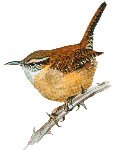
In Ireland in that location is an Irish custom called "feeding the wren". The custom is based on a legend of St. Stephen. Once he was forced to hibernate in a bush, simply a chattering wren gave him away. In the past Children caged the wren to help information technology do penance for this misdeed. Nowadays children carry a long pole with a holly bush at the peak - which is supposed to hide a captured wren.
In the UK Boxing Day is still a public holiday, some shops and supermarkets open up nowadays, only banks and most offices remain closed.
The Twelve Days of Christmas - December 26th to January sixth

The sixteenth century saw England get-go officially celebrate the Twelve Days of Christmas. Shakespeare'south Twelfth Night premiered in the showtime yr of the seventeenth century, in a functioning at the court of Elizabeth the Start.
Appearance is usually solemn and religious in spirit, while Saint Steven's Day marks the beginning of the twelve days of Christmas, a lite hearted fourth dimension given over to merry making and fun. It is a holiday of eye-warming homecoming and family gatherings, with candles glowing in the windows as a sign of welcome.
During the ancient 12-day Christmas celebration, information technology was considered unlucky to let the log in the fireplace stop burning. This log was called the Yule log and would exist used to calorie-free the fire in New Year, to ensure that good luck carried on from year to twelvemonth. The Yule Log custom was handed downwardly from the Druids, but with the appearance of gas and electric fires information technology is rarely observed present.
Another custom in medieval times, was to hibernate a dried edible bean in a cake, the cake was then eaten on 12th Night (January 6), during the almost boisterous political party of the twelvemonth. The finder of the bean became "Male monarch of the Bean" and ruled the political party for the night.
Another eating myth is that for every mince pie yous eat over the 12 days of Christmas you will accept a calendar month of good luck the following year!
Still, co-ordinate to A Commemoration and History(ISBN 0-679-74038-4), by Leigh Grant, the written lyrics to "The Twelve Days of Christmas" first appeared in Mirth without Mischief in the early on 1780s in England. Grant states that the tune to which these words are sung apparently dates back much further and came from France. Mirth without Mischief describes "The Twelve Days of Christmas" as a blazon of memory game played by children at that time. A leader recited the first poesy, the next kid recited the 2nd verse, and then on until someone missed a verse and had to pay some kind of penalty in the game. At that place was no religious significance. At anyrate the popular urban myth makes a skilful story... at to the lowest degree as good equally the song itself, and so here is a piece of urban myth civilisation for you: A very famous song near this time of twelvemonth is "The Twelve Days of Christmas", which has a very interesting history. During the period 1558 to 1829 Catholics in England were prohibited from any practise of their organized religion by law - individual or public. It was a crime to exist a Cosmic. Some people say that the song was written to help young Catholics learn the tenets of their faith during that catamenia when to be caught with anything in 'writing' indicating adherence to the Catholic faith could non only get you imprisoned, just could as well get you hanged, drawn and quartered! The vocal'southward gifts are allegedly hidden meanings to the teachings of the religion. "Truthful Love" mentioned refers to God. "Me" refers to every baptized person, here are the other lyrics and their other hidden meanings. However, some people say this is an Urban Myth, simply you tin make your ain mind up.
If you want to know today'due south toll of this generous gift giving check out PNC Depository financial institution'south web site.
How would you feel to receive such lovely gifts? Read the replies that Sarah Truelove sent to her beloved.
New year's day's Eve - 31st Dec
See hither for New year's Eve and New year's Mean solar day.
Christmas Nutrient
There are several "traditional" meals yous can have at Christmas. Here'southward a brief wait at what the British nosh on Christmas day.
Christmas Dinner

In the by some very strange things were eaten around Christmas. At lavish Christmas feasts in the Middle Ages, swans and peacocks were sometimes served "endored". The flesh was painted with saffron dissolved in melted butter and the birds were served wrapped in their own skin and feathers, which had been removed and set aside prior to roasting.
Around Victorian times another traditional Christmas banquet was roasted goose or roasted turkey. In Victorian times, nigh Londoners would have been familiar with the "goose lodge", which was a method of saving to buy a goose for Christmas. Goose clubs were popular with working-class Londoners, who paid a few pence a week towards the purchase of a Christmas goose. The calendar week before Christmas, London meat markets were crammed with geese and turkeys, many imported from Germany and France, although some were raised in Norfolk, and taken to market in London. The birds were walked from Norfolk to the markets in London, to protect their feet the turkeys were dressed in boots made of sacking or leather and geese had their anxiety protected with a covering of tar. The traditional Christmas goose was featured in Charles Dickens' 'A Christmas Ballad'.
Nowadays, if y'all sit down with a typical British family on Christmas day, the starter is probably going to be prawns or smoked salmon. The main form is more than likely to exist turkey, often free-range and the bigger the better, although goose has been making a bit of a comeback, and for the vegetarian in the family (there's always ane) a nut roast, this is commonly served with potatoes (roasted, boiled, mashed, or maybe all 3), vegetables (including the devil's veg - brussel sprouts) roasted parsnips, and stuffing with gravy and bread sauce. This is usually followed by Christmas pudding; a rich fruit pudding served with brandy sauce or brandy butter.
Christmas Pudding
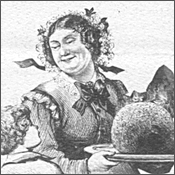
Christmas puddings or plum puddings are a very rich, dark pudding made with all sorts of dried fruits, nuts, spices, blackness treacle and lots of sherry or brandy. Y'all tin read more than most Christmas puddings here.
Here'south my Christmas pudding recipe (should be made in advance)
Christmas Cake
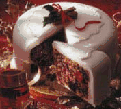
Christmas cakes are besides very rich and dark and incorporate just about every stale fruit you can think of, nuts (unremarkably blanched almonds) glace cherries, candied peel and once again, sweetened with blackness treacle. They are covered with a layer of marzipan or almond paste and and then thick white "Royal" icing fabricated with icing carbohydrate and egg whites.
It was introduced as a custom past the Victorians. Prior to that flow, cake was eaten during Christmas, only without the toppings. The thought of using marzipan is thought to be linked to the Tudor Marchpane an iced and decorated cake of marzipan that acted every bit the tabular array centrepiece during banquets and festive occasions. They should be made about six weeks before Christmas and are unremarkably busy with ribbons and images of Santa Claus or robins with holly.
Here'due south my Christmas block recipe (should exist made in advance)
Mince Pies
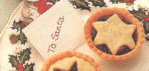
Mince pies were ofttimes known as Christmas pies, they were banned in the seventeenth century by that killjoy Cromwell but eventually came back into beingness after the Restoration. They are fabricated with mincemeat – which doesn't contain meat at all (run into my recipe). The sweet, rich and fruity pies that nosotros are at present accustomed to developed early in the twentieth century when the meat content was removed for good and now the "mincemeat" is a mixture of dried fruit (raisins, sultanas, candied peel, etc.,) apples, spices, saccharide and suet, often moistened with brandy or sherry, and baked in pocket-sized pastry cases.
If the mincemeat is dwelling house made everyone in the household should stir it as it is considered to be lucky. The cases should exist oval in shape, to represent the manger, with a tiny pastry baby Jesus on acme, just as very few people accept tins that shape they are nearly ever round now.
Here'southward my recipe for mincepies and mincemeat.
Images of Christmas
Many Christmas traditions, including the Christmas card, originated in the UK. Yule logs, plum pudding, mince pies, fruitcakes, wassailing, the Christmas goose, mistletoe, holly and ballad singing, are all firmly rooted in British soil.
Christmas Carols

Christmas carols have their roots in medieval England, when minstrels traveled from castle to castle, today they would be called carollers. In improver poor people in England would go wassailing, they would bring their mugs to the door of rich houses hoping for a share of the wassail basin. The drinkable in the basin was chosen lambswool. It was a mash of hot ale with sugar, eggs, spices and roast apples floating in it.
The book "A Christmas Carol" was written past Charles Dickens. It is the tale of a miser chosen Ebeneezer Scrooge who is visited by four ghosts (Jacob Marley, The Ghost of Christmas By, The Ghost of Christmas Present and the Ghost of Christmas Future). He was made to see the mistake of his means and became a reformed grapheme.
Today carollers generally collect coin for clemency. The 'Round Table' in England often sends a big sleigh with a Christmas tree and people singing and playing carols effectually the cities and towns of England. In Wales, each hamlet may accept several choirs which rehearse well in accelerate of the holidays and then go carolling collecting coin for charity.
The Christmas Stocking and Santa Claus
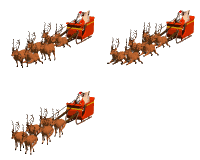
The Story of St Nicholas (the original Santa Claus)
The real St. Nicholas lived in Turkey, he was bishop of the Turkish town of Myra in the early quaternary century. It was the Dutch who first fabricated him into a Christmas gift-giver, and Dutch settlers brought him to America where his proper name eventually became the familiar Santa Claus.
However, he is a very pop saint in England where at that place are almost 400 churches of St. Nicholas, more than even than churches of St. George, England's patron saint. Many different stories are told to British children about Saint Nicholas, here is just i:-
Long long ago, in the days when Saint Nicholas was alive, there lived a kindly nobleman. He had a cute married woman and three pretty young daughters, and all the money his family unit would ever demand. But one solar day, the female parent of the family unit, who was a sweet gentle woman, became very ill. The nobleman was frantic! He summoned the town'due south only dr., a very quondam, very wise woman, who knew all at that place was to know about herbs and magic.
The one-time woman tried all the cures she knew, but she could do zero to relieve the poor woman. Finally he called for the priest to come, merely by that time his poor wife had passed away. The nobleman was in despair! He missed his married woman so much that he lost his head. He wasted all his money away on silly projects and useless inventions. He became so poor that he had to movement his family out of their castle and into a piddling peasant'due south cottage. Meanwhile his daughters were growing up. Poverty was difficult for them, simply they remained cheerful and potent. They soon learned to do their own cooking, cleaning and sewing, and they took intendance of each other.
All 3 girls were very pretty. In fourth dimension each of them brutal in beloved and wanted to get married. Merely they couldn't because their father was so poor. He had no dowry (a sum of money or some valuable property) to give to the prospective husband'southward family. He felt he had failed his ain children, and he became even more pitiful and gloomy.
Now, Saint Nicholas happened to live in the same area. The kindly saint had dedicated his whole life to doing good deeds, and was always on the sentry for someone in demand. 1 night the saint came riding through the town on his white equus caballus looking for the house of the nobleman and his three daughters. He rode up to the cottage and peeked in through a chink in the wall. That aforementioned night, the daughters had washed out their apparel past mitt, and hung them upwards in front end of the fireplace to dry. There were the stockings, 3 pairs, hanging right on the chimney. Inspiration struck Saint Nicholas. From his pouch he took out three trivial numberless filled with gold coins. One by one he threw the bags down the chimney, and so they landed in the stockings of the three daughters. The nobleman, worried about his daughters' futures, had terrible trouble falling asleep a night and was notwithstanding awake. He heard the prune clop of the white horse every bit the saint was leaving, and peeked out of the door. He chosen out to Nicholas, but he had already disappeared into the dark night.
When the daughters woke in the morning, they plant their stockings filled with enough of money for their dowries. When they went to tell their male parent, they found him sleeping peacefully with a grinning on his face. Saint Nicholas had taken care of all his worries. And so, through the goodness of Saint Nicholas the iii daughters were able to marry the men they loved, and the nobleman lived on to exist a happy granddad.
St. Nicholas is a very difficult-working saint, being the patron saint of children, merchants, apothecaries, pawnbrokers, scholars and mariners. He is reputed to be able to calm storms and rescue sailors. Fifty-fifty pirates have been known to claim his protection. Over the years he has become known equally Santa Claus and fifty-fifty his at present traditional red costume tin be traced to Coca Cola advertising in America!
The tradition of hanging upward the stocking is still followed in the British Isles. It is left out on Christmas Eve, along with mince pies, sherry and carrots for Santa and his reindeer, and fifty-fifty today most children are in bed way before midnight waiting for Santa to visit.
The stocking is opened by excited children on Christmas morning time. Nowadays the gifts Santa Claus brings tin be quite elaborate, in Victorian times it was traditionally fruit, basics, sweets and coins.
Christmas Cards
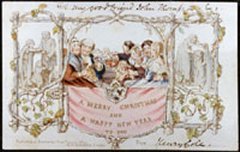
Christmas cards became popular in Victorian England, they were by and large home made and given to loved ones. The first ever Christmas menu was the brainchild of Sir Henry Cole, a leading cultural light in Victorian England who was later to become managing director of the Victoria and Albert Museum. The first commercial Christmas menu (pictured higher up) had a hostile reception from some people because it depicted a family, children as well as adults, drinking wine. The card was painted by John Calcott Horsley. It depicts a family unit feast, under which appear the words, "A Merry Christmas and a Happy New Year to You". Side panels illustrated acts of Christmas charity - feeding and habiliment the poor etc..
Notwithstanding it was Louis Prang, a 19th-century High german immigrant to the United states of america, who popularised the sending of printed Christmas cards. Prang was a Bavarian-born lithographer who settled in Boston, Massachusetts in the 1850s and established a successful printing business. He invented a manner of reproducing color oil paintings, the "chromolithograph technique", and created a carte du jour with the bulletin "Merry Christmas" as a way of showing it off. He went on to produce a series of pop Christmas cards. By 1881 he was printing more than five million cards annually.
The first charity Christmas card was produced by UNICEF in 1949. The motion-picture show chosen for the menu was painted not past a professional person artist but by a vii year old girl chosen Jitka Samkova of Rudolfo, a small town in what was then Czechoslovakia. The town received assist from UNICEF later on the 2d Globe State of war, inspiring Jitka to paint some children dancing around a maypole. She said her pic represented "joy going circular and round".
Nowadays most people buy their cards from Hallmark etc., they are sent before Christmas Mean solar day and people use them to decorate their houses. It tin can be an expensive affair though, some families send and receive well over 100 cards. But what could be nicer than a mantle piece decorated with beautiful cards bearing good wishes from friends and relatives.
Christmas Presents

Like many of our Christmas customs, souvenir giving has its historical origin in an aboriginal pre-Christian tradition. During the ancient Roman celebration of Saturnalia, the harvest festival, small candles and dirt figures were given. At Calens, the Roman new-year, more than elaborate gifts were exchanged. The Romans believed that sweetness gifts would ensure a good twelvemonth, so fruits, honey, and cakes were popular gifts. Evergreen branches, were given as symbols of continuous health and forcefulness. Wealthy Romans gave each other gold coins for good luck. Everyone gave gifts, children gave to their teachers, slaves gave to their masters, and the people gave to their emperor. Fifty-fifty though the three kings and others gave presents to the baby Jesus, gift giving did non become an established part of the Christmas celebration until several centuries later on the birth of Christ.
Considering the early Christians did not want their organized religion to be associated with pagan festivals, they shunned gift giving equally a infidel do. It was in the center ages that gift giving began to be role of the Christmas tradition. The kings of England, like the emperors of Rome, demanded gifts from their subjects. The mutual people also exchanged gifts, just just amongst the wealthy were elaborate gifts given. The poor exchanged trinkets and entertained each other with songs and parties and plays.
Nowadays, the knitted pattern jumper is considered to be the worst present you lot could find under the tree, followed by a dustpan and brush and the dreaded socks.
 Christmas Crackers
Christmas Crackers take been a function of the traditional British Christmas since1847, when about by accident, Tom Smith invented the cracker. They are used to decorate the table at dinner.
In it's simple form a cracker is a small cardboard tube covered in a brightly coloured twist of paper. When the cracker is 'pulled' past two people, each belongings one cease of the twisted paper, the friction creates a small explosive 'pop' produced by a narrow strip of chemically impregnated paper. Inside the cracker there is usually a tissue paper hat, a airship, a slip of paper with a very corny joke on it (for instance: "What does Santa call his blind reindeer?" "No-eye-deer!" / "Where do fish wash?" "In the river basin!" / "What do yous go if you cantankerous a sheep with a kangaroo?" "A wooly jumper!" /" What lies in a pram and wobbles?" "A jelly baby!" ) and a pocket-sized gift (ordinarily a petty cheap plastic thing due east.g. a plastic ring or nail clippers).
The family will pull each other'due south crackers earlier the meal starts, this often involves crossing arms and pulling ii crackers at once. The person who gets the "big end" keeps the plastic trinket. The newspaper hats are donned, and the jokes read out, accompanied by moans and groans at how awful they are. Then, and merely and then, can the meal begin.
Christmas Trees

Christmas trees are an integral part of the Christmas decorations in most British households. Although it was always traditional to bring evergreens into the house the Christmas tree is some other tradition borrowed from Frg, where information technology is said that German language Martin Luther was the first person to decorate a tree with candles and bring it indoors to testify his children what stars looked like at nighttime in the woods. It didn't become popular in Britain until the nineteenth century, when Queen Victoria's hubby Prince Albert introduced the custom from Germany.
Nowadays in the United kingdom of great britain and northern ireland yous will discover a variety of copse, from existent trees with roots that can be replanted after the festivities, to felled copse that get recycled, to plastic imitations that get unpacked every year. No one seems to be able to hold which is the nigh environmentally friendly pick. The tree volition be decorated with lights (candles are a rarity due to the gamble of fire), tinsel, baubles, chocolate figures and coins, and the obligatory angel / fairy on the peak.
There's a lovely joke about how the fairy ended upward on the top of the Christmas tree here.
Mistletoe

Mistletoe was considered sacred past the people of ancient United kingdom of great britain and northern ireland. The Druid priests used it in their sacrifices to the gods.It was believed to have magical properties. People who met nether a tree bearing mistletoe were forbidden to fight, fifty-fifty if they were enemies, and anyone who entered a home decorated with mistletoe was entitled to shelter and protection. Mistletoe may even accept been part of Druidic wedding ceremonies. The Celtic people believed it had miraculous healing powers. In fact the name for mistletoe in the Celtic languages is all heal. mistletoe could cure diseases, return poisons harmless, make humans and animals fertile, protect the house from ghosts and bring good luck.
In eighteenth century England mistletoe was credited, not with healing power, only with a different kind of magic. It was the magic chemical element in the kissing brawl, a special decoration used at Christmas parties. The kissing ball had a round frame that was trimmed with evergreens, ribbons and ornaments. Tiny nascence figures were placed inside it. For the finishing touch, a sprig of mistletoe was tied to the bottom of the ball. Information technology was then hung from the ceiling, and party goers would play kissing games underneath information technology. A kiss nether the mistletoe could mean deep romance or lasting friendship and good will.
The mistletoe's kissing tradition, according to 1 business relationship, comes from the Norse myths. Friga, one of the gods, gave her son, Balda, a charm of mistletoe to protect him from the elements, but because mistletoe grows neither from the water or the earth, nor from fire nor air, it grows on trees, it held the ability to harm Balda. I of the other god's arrows made of mistletoe struck Bolda down, and his female parent cried tears of white berries. She brought her son back to life, and vowed to buss anyone who rested below the institute. Thus the kissing tradition began.
In that location is a limit to how much you tin can buss under 1 sprig of mistletoe though. For each kiss a berry must be removed and once all the berries are gone - no more kissing!
The Holly and the Ivy

Holly, with its dark green spiky leaves and ruby-red berries, was besides believed to have magical powers and the ability to bulldoze demons away. In Germany holly was considered to be a good luck amuse against the hostile forces of nature.
In old England, single women were supposed to necktie a sprig of holly to their beds, to guard them confronting ghosts and devils. the In medieval times, when people were genuinely agape of ghosts and demons, supernatural creatures were believed to exist especially active at Christmas time.
For the Northern Europeans, Christmas came in the middle of winter, when the nights were very long, dark and cold. The voices of Ghosts and demons, witches, goblins and werewolves could exist heard screaming out in the winter winds and storms. Then the magical powers of mistletoe and holly were taken quite seriously. In Roman times ivy was the ancient symbol of Bakus, the god of wine and revelry. Due to its association with heathen festivals, for a long fourth dimension, ivy was banned from the inside of Christian homes, and used just to decorate the exterior. Not so any more. Its green has get part of the traditional Christmas.
Other Christmas Decorations
Along with a tree, and bits of tree, holly, ivy and misteltoe, a lot of other materials are used to decorate the house at Christmas. Some people don't even stop inside the house and the almost amazing displays of lights and various inflatables decorate their forepart gardens. Wonder round urban areas of the UK you tin spot the houses that accept entered into the "competitive" spirit of seeing who can cram the most stuff into the smallest space.
Within the house you will typically find garlands, fake snow, nascency sets, candles, window decorations, and row upon row of Christmas cards. The table volition be set (probably the only fourth dimension in the twelvemonth when the whole family unit sits downwardly together to consume) with the best tabular array textile, glasses, crockery and cutlery.
Pantomime
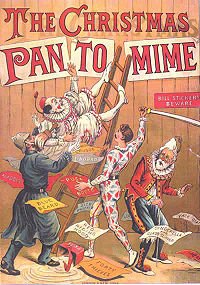
Pantomime or "panto" is traditionally performed at Christmas, with family audiences consisting mainly of children and parents. British pantomime is now a popular class of theatre, incorporating vocal, dance, buffoonery, slapstick, in-jokes, audition participation, and mild sexual innuendo. There are a number of traditional story-lines, and there is also a fairly well-defined set of operation conventions. Many theatres in cities and provincial towns throughout the U.k. keep to have an annual pantomime and it is very pop with Amateur Dramatics societies. The Pantomime season lasts from around December to February. Y'all should be able to run into pantomime productions in many village halls and similar venues across the country.
At that place are a few conventions, which tin can be a flake "surprising" if you're new to panto.
* The leading male juvenile grapheme (the "master boy") is traditionally played past a young woman, usually in tight-fitting male garments (such as breeches) that make her female person charms evident.
* An older woman (the pantomime dame - often the hero'south mother) is usually played by a human being in elevate.
* Risqué double entendre, frequently wringing allusion out of perfectly innocent phrases. This is, in theory, over the heads of the children in the audience, but titillating to the adults.
* Audition participation, including calls of "look behind you!" (or "he's behind you!"), and "Oh, aye it is!" or "Oh, no information technology isn't!" The audition is e'er encouraged to "Boo" the villain, cheer the hero, and "Awwwww" whatever poor victims, such every bit the rejected dame, who usually fancies the prince.
* Sing-a-long, usually a song that combes a well-known melody with re-written lyrics is sung. The audience is encouraged to sing the song; frequently one one-half of the audience is challenged to sing "their" chorus louder than the other one-half.
* The animal, played by an role player in "beast skin" or animal costume. It is often a pantomime equus caballus or cow, played by 2 actors in a single costume, i as the head and front legs, the other as the body and back legs.
* The adept fairy always enters from stage correct and the evil villain enters from phase left. In the past the correct side of the stage symbolized Heaven and the left side symbolized Hell.
* The members of the bandage throw sweets to the children in the audience (although present this is often not done due to wellness and safety restrictions).
* Sometimes the story villain will squirt members of the audience with water guns or pretend to throw a bucket of "water" at the audience that is actually full of confetti or streamers
* A slapstick comedy routine is ofttimes performed, often a decorating or baking scene, with humour based around throwing messy substances and custard pies in the face.
The Nativity Play
A Nativity play is a play, usually performed at Christmas, which recounts the story of the Nativity (birth) of Jesus.
Many primary schools and Sunday schools in the UK put on a Nascence play. Schoolchildren in costume act equally the human and angel characters, and often as the animals and props. The baby Jesus is sometimes represented by a doll, simply sometimes played by a existent infant. Every twelvemonth parents of young children dread the note from the school to say what role their child will play. Why do the dread it? Considering they have to brand the costume, and it'due south a very competitive thing. Parents are judged on the quality of the costume, children are judged on the role they become to play and how many lines they get to speak. If y'all're interested I got to play the star - non i line.
In the Britain, increasing secularism and sensitivity in multicultural areas has led many schools to end the performance of Birth plays, or significantly alter their content, causing others to complain about excessive political correctness. In 2014, at that place were reports of drunken spacemen, Elvis Presley, footballers, aliens, punk fairies, and a lobster (that must be a posh schoolhouse) all making an advent.
Another controversial topic is taking photographs or filming the play. Some schools have banned this because of fears of inappropriate use of the images. However, some canny schools so sell DVDs of the play.
The Nativity Scene
A nativity scene, or crèche, is a depiction of the birth of Jesus as described in the gospels of Matthew and Luke. Sometimes the scene is a static, three dimensional scene, but there are so chosen "living nativity scenes" in which real humans and animals participate.
A typical nascency scene consists of figures representing the babe Jesus, his female parent Mary, and Mary'south married man, Joseph. Some nativity scenes include other characters from the Biblical story such every bit the shepherds, the Magi, and angels. The figures are usually displayed in a stable, cave, or other structure.
Saint Francis of Assisi is credited with creating the starting time nativity scene in 1223 (a "living" ane) intending thereby to cultivate the worship of Christ. The scene's popularity inspired communities throughout Christendom to stage similar pantomimes and eventually to create elaborate and ever more elaborate static exhibitions with wax, wooden and even ivory and precious metal figurines garbed in rich fabrics ready against intricate landscapes.
The Wishbone
Chickens and turkeys comprise a y-shaped bone known as the furcula (be conscientious how y'all pronounce that i), more ordinarily information technology is referred to as the wishbone. Traditionally this is removed from the carcass of the roasted bird, and dried out. It is and so given to two people (normally children), who have to hook their little finger round an finish each and pull it apart until it breaks, whilst making a wish. The person who gets the "bigger one-half" of the wishbone will have his or her wish "come true." Of course, in the great tradition of making wishes, you mustn't tell anyone what you wished for, or it won't come up true.
Don't worry if you lot are a vegetarian. If Santa brings you a 3d printer, you can print one out: 3d printed wishbone
Christmas On-Line
We accept a recipe for Christmas Pudding here
You can detect Lynne's recipe for mincepies and mincemeat here.
 Don't worry if information technology doesn't snow in your country. Hither you lot can build your own on-line snowman!
Source: https://www.learnenglish.de/culture/christmas.html
0 Response to "Children's Nativity Scene Sheep and Mary Fight Over Baby Jesus"
Post a Comment