what percent of black people listen to country musix
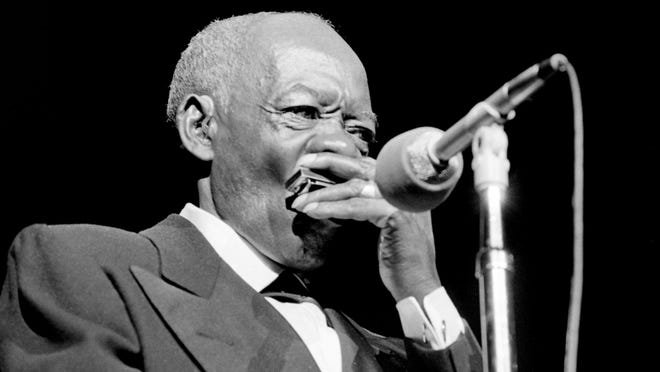
As artists, advocates and some gatekeepers go along to push for racial equality in land music, a new study shows a mountain of piece of work needed to accomplish parity in the format.
"Redlining in Country Music: Representation in the Country Music Industry (2000-2020)," a SongData study published by Jada Watson, musicologist at the University of Ottawa, outlines two decades of radio play, award nominations and label representation for Blackness, indigenous and people of color (BIPOC) in the format.
The data shows deep, longstanding disparity between radio play and awards recognition for white artists in 21st century commercial country music when compared to their BIPOC counterparts.
Takeaways include:
- BIPOC artist representation — including airplay, CMA and ACM Awards nominations, record deals and charting singles — makes up less than iv% of the commercial country music industry, according to the written report.
- BIPOC artists received a ii.iii% share of country radio airplay in the last nineteen years. Nearly 96% of that share went to BIPOC men, with women receiving less than 3%.
- Only 19% of songs released by BIPOC artists received enough spins to peak in the summit 50 of airplay charts. Cipher songs by Blackness women reached the top twenty on country radio charts.
- State radio played 11,484 songs from 2002-2020. Roughly 1% of those songs — or a total of 133 — were by Black artists.
- 2.3% of ACM Awards and one.half dozen% of CMA Awards nominees between 2000 and 2019 were people of color.
"The idea that BIPOC artists practise not make country music — that they're non participating in this space — is a myth that's still perpetuated in this data," Watson told The Tennessean.
Watson points to formative years of the industry — when, despite intertwining Black and white musicians in the S shaping country music, gatekeepers a century agone drew racial lines with hillbilly records (marketed for rural white listeners) and race records (songs framed for Black audiences) — equally one reason for why a gaping racial imbalance exists today.
"The problem is, historically, this industry was founded along musical colour lines that excluded BIPOC artists right from the beginning," Watson said. "That white, racial framing has been doubled-down at every plough. Nosotros see that in this information however.
"The topline takeaway is less in the information that information technology reveals but the fact that we're in 2021 and the systems are all the same existence upheld 100 years later on," she added.
More:For nearly a century, Black artists have shaped land music
And women of color stand with much to gain from radio play — a game-changing factor in breaking mainstream country artists. Of the xi,484 country radio songs played from 2002 to 2020, only 23 were past Black women. Mickey Guyton's 2015 unmarried "Ameliorate Than You Left Me" stands as the highest-charting land song by a Blackness adult female this century, peaking at No. 30.
Moreover, airplay for BIPOC women in 2020 typically happened in evening or overnight slots, according to the study. Watson found that nearly 44% of BIPOC women airplay happened overnight concluding year.

"While new songs are typically added in the overnights first, a historic practice at radio, this is a class of cultural redlining that avoids investment in Black women by relegating their songs to a daypart with no audience," the study said.
Still, some artists of colour in country music continue to make groundbreaking headway outside of radio. Guyton delivered a standout performance of her Grammy-nominated song "Blackness Like Me" during the 63rd annual Grammy Awards concluding calendar week; next month, she'll be the kickoff Black woman to host the ACM Awards.
Elsewhere, Rissi Palmer earned a slot at the Country Music Hall of Fame and Museum'due south "American Currents" exhibit for "Color Me Country," an Apple Music radio prove highlighting BIPOC artists. Willie Jones, a Louisiana-raised newcomer, signed to Sony Music Nashville, the same label where biracial artist Kane Dark-brown, an established hitmaker, launched his imprint characterization, 1021 Entertainment.
And song representation on radio increased from 0.five% in 2002-07 to iii.four% in 2014-xx (4.eight% in 2020), with Dark-brown, Jimmie Allen and Darius Rucker accounting for much of the shift. Only those numbers don't point to progress if more artists aren't gaining traction, Watson said.
"Yes, there has been an increase in representation; it's marginal when you're thinking of going from an increase of 0.5% of the airplay to 4.8% by the cease of the period," Watson said. "This is not progress. This is not diversity."
Source: https://www.tennessean.com/story/entertainment/2021/03/23/country-music-racial-disparity-study-black-artists/4714774001/
0 Response to "what percent of black people listen to country musix"
Post a Comment